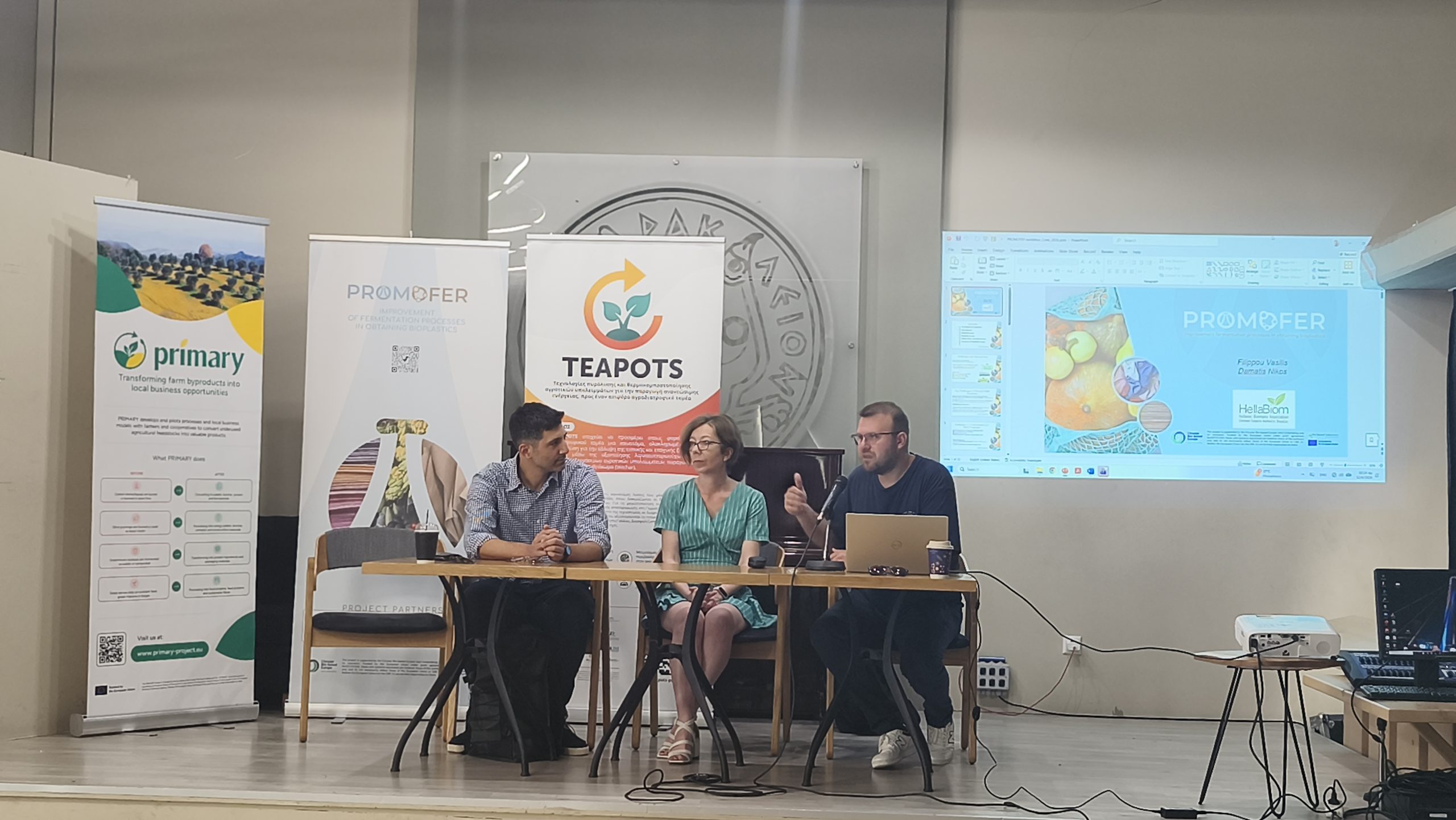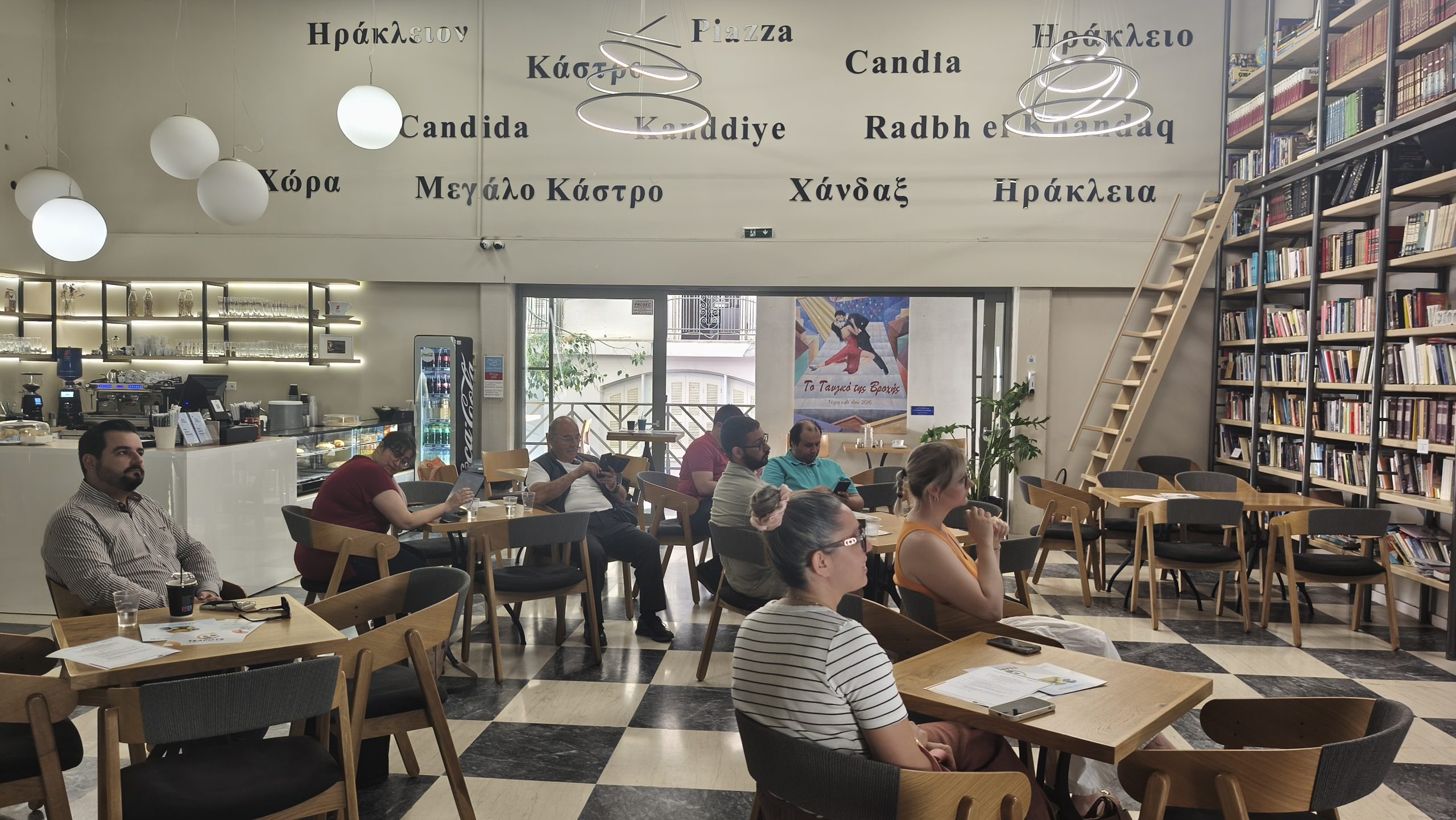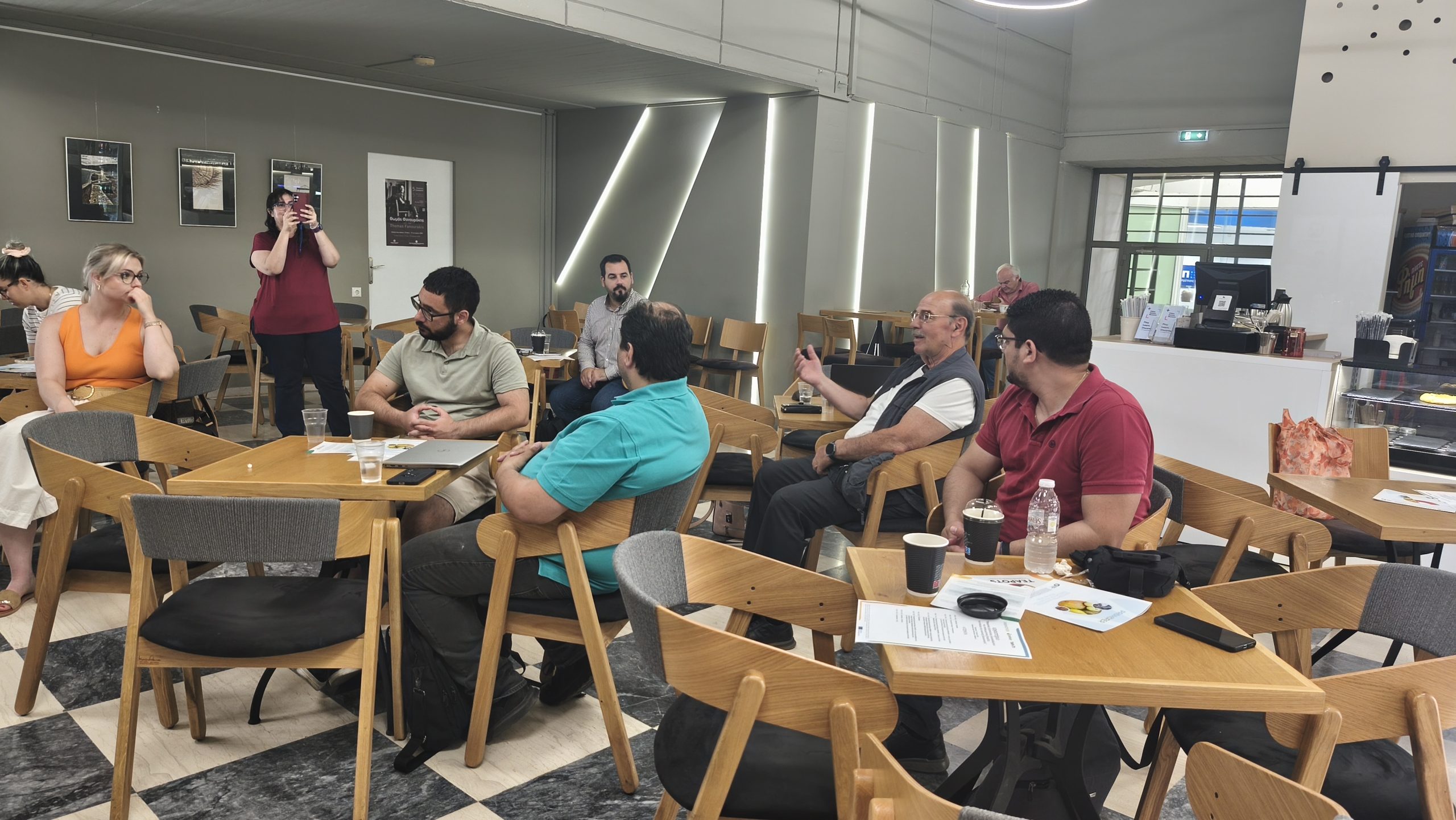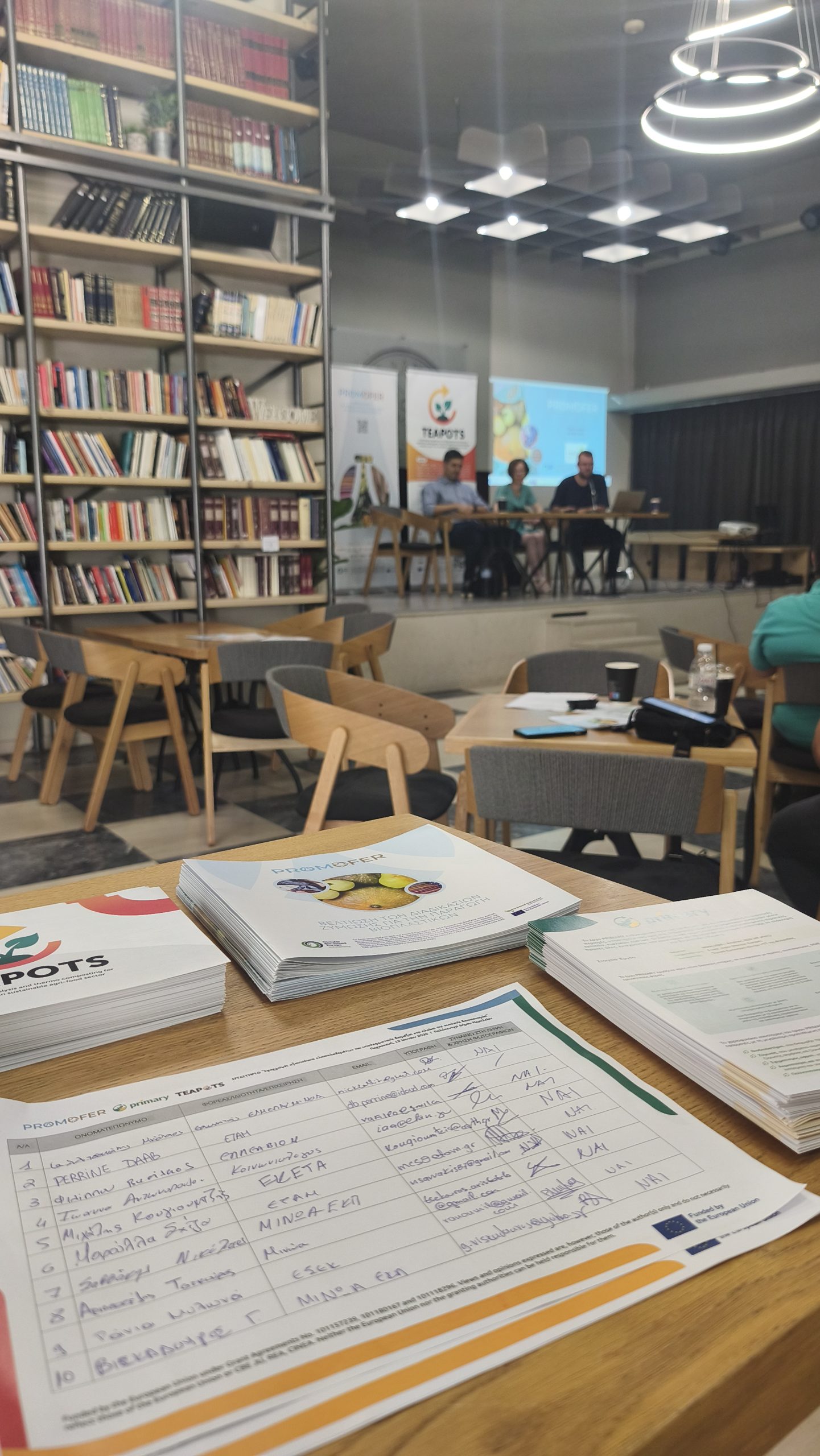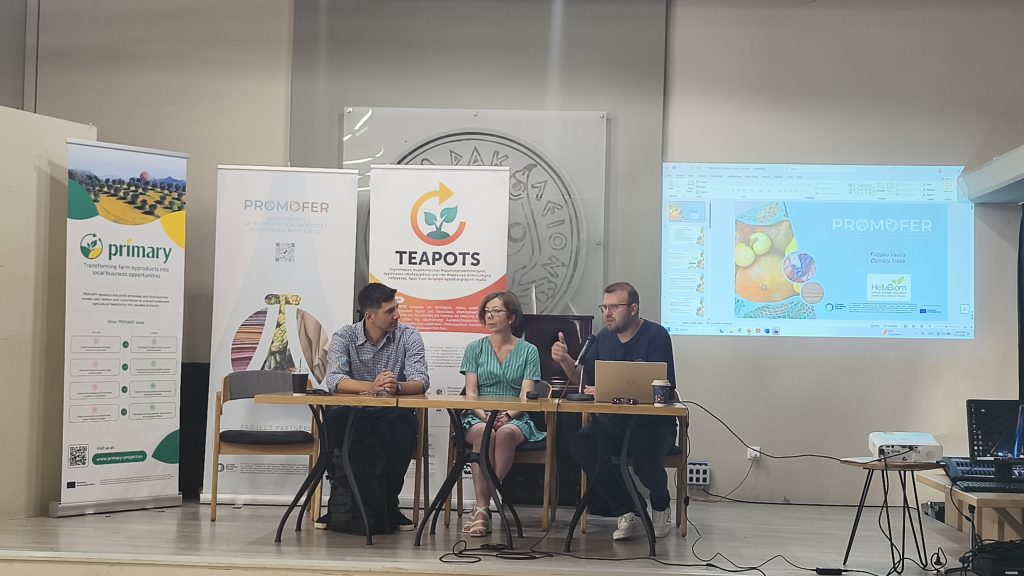
On 12 June 2026, the European research projects PROMOFER, PRIMARY, and TEAPOTS successfully co-organised the workshop entitled “Applications for the Utilisation of Olive Pruning Residues and Residual Biomass within the Circular Bioeconomy Framework” in Heraklion, Crete.
The event brought together stakeholders from the bioeconomy sector to exchange knowledge and discuss innovative approaches for the sustainable management and valorisation of agricultural residues, with a particular focus on olive pruning biomass. Participants highlighted the importance of strengthening cooperation among research projects, local communities, and the agricultural sector to accelerate the transition towards a more sustainable and circular bioeconomy, while learning about the latest developments and achievements of the three projects.
The PROMOFER project was presented by Dr. Vasilis Filippou, Scientific Associate at CERTH/HELLABIOM, and Mrs Maroulla Schiza from ETAM S.A. Following an overview of the project’s objectives, Dr. Filippou focused on the role of HELLABIOM and the development of Green Biomass Collection Points as key elements of sustainable biomass value chains, highlighting opportunities to improve biomass collection, logistics, and utilisation practices at regional level. Mrs Schiza presented ETAM S.A.’s contribution to the project, outlining its communication, stakeholder engagement, and exploitation activities, while emphasizing the importance of aligning research outcomes with market demands and end-user needs.
The PRIMARY project was presented by Aristotelis Tsekouras from MINOA Energy Community, who focused on value chains for olive pruning residues and their energy utilisation, demonstrating how local upcycling solutions can create business opportunities while supporting rural development.
Dr. Michalis Kougioumtzis, Scientific Associate at CERTH/HELLABIOM, introduced the TEAPOTS project and presented circular bioeconomy applications that convert olive pruning residues into renewable energy and biochar through pyrolysis technologies, highlighting both environmental and economic benefits.
The workshop concluded with an interactive discussion session where participants exchanged experiences, identified challenges, and explored opportunities for future collaboration. Discussions underscored the need for stronger stakeholder engagement, improved biomass collection systems, supportive policy frameworks, and continued investment in innovative technologies. The event confirmed the strong potential for cooperation among researchers, farmers, energy communities, businesses, and public authorities in advancing green growth and rural development in Crete and beyond.