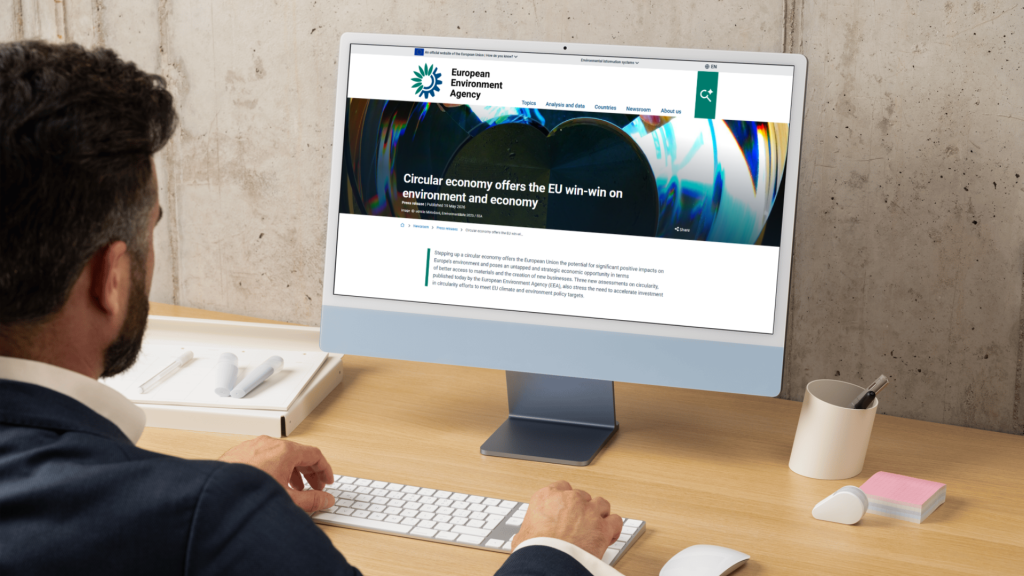
A new European Environment Agency (EEA) analysis highlights that accelerating the transition to a circular economy offers significant environmental and economic benefits for the European Union, reinforcing ongoing efforts under the EU bioeconomy strategy to decouple growth from resource use and environmental degradation.
According to the EEA, circular economy approaches can reduce waste, improve resource efficiency, and support Europe’s transition toward climate neutrality. These objectives strongly align with EU-funded research and innovation projects in the bioeconomy sector, which are developing renewable, bio-based alternatives to fossil-based materials and promoting sustainable value chains across industries such as agriculture, construction, chemicals, and packaging.
EU bioeconomy initiatives, including Horizon Europe-funded projects, are actively contributing to this transition by transforming biological resources and organic waste into high-value products, while supporting industrial competitiveness and regional development. These efforts reflect the EU’s broader policy direction to strengthen synergies between circular economy principles and bio-based innovation.
The EEA findings further underline the importance of scaling up collaboration between research institutions, industry stakeholders, and policy actors to maximise the impact of circular and bio-based solutions across Europe.