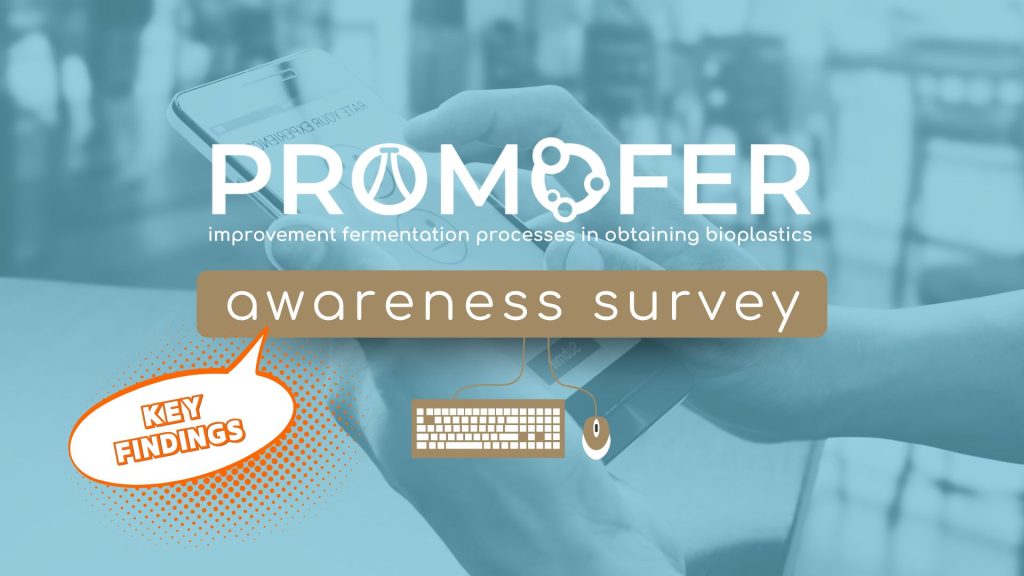
The results are in, and the message is clear... People are ready to embrace the transition from waste to value!
As part of the PROMOFER awareness survey, we asked participants about their knowledge, expectations, concerns, and information needs regarding biobased products derived from agri-food waste. The survey was designed to better understand public perceptions and help shape the project’s future communication activities.
What did we learn?
- Awareness of biobased products is already relatively high: More than 75% of respondents reported moderate to extremely high familiarity with the concept of producing biobased products from agri-food waste.
- Environmental benefits remain the strongest driver: Reducing landfilled waste and valorising agricultural residues were identified as the most important benefits, followed closely by reducing greenhouse gas emissions.
- Cost and performance are still key concerns: Participants highlighted higher costs and product durability as the main barriers that could slow down the wider adoption of waste-based bioproducts.
- Trust matters: Endorsements from EU institutions, universities, and environmental agencies were considered the most important factors for increasing confidence in PROMOFER bioproducts.
- People want clear, accessible information: Short explainer videos were by far the preferred communication tool, followed by webinars and easy-to-understand factsheets.
The results confirm that awareness of circular biorefineries is increasing, but they also highlight the need for transparent information, credible scientific communication, and practical examples that demonstrate the real-world benefits of sustainable, waste-based innovation.
At PROMOFER, we will continue transforming agricultural and food-industry by-products into innovative biopolymers, platform chemicals, and bio-coatings while advancing our vision of a zero-waste, zero-pollution future.
Stay tuned for more updates as we continue building a more circular and sustainable bioeconomy.