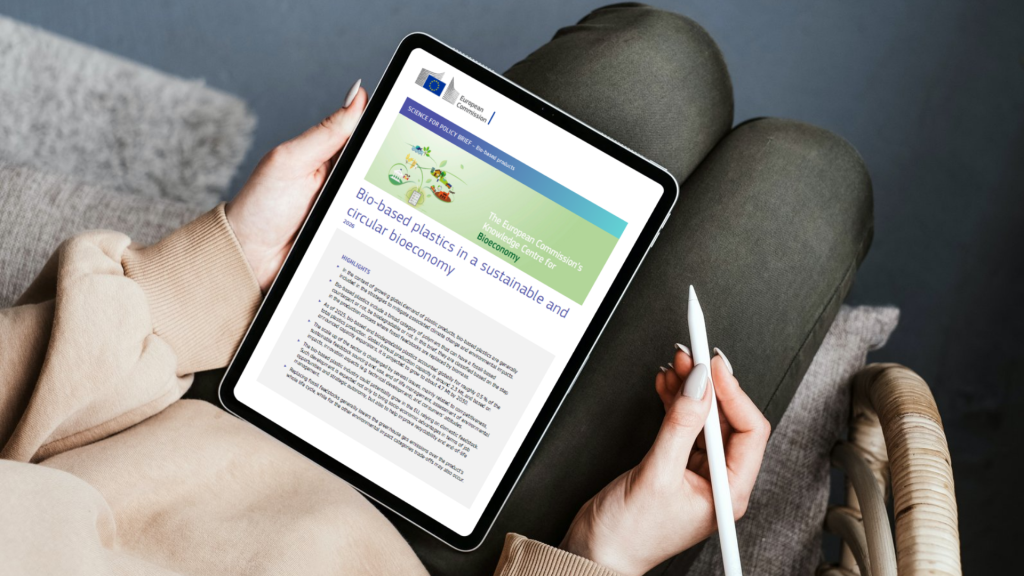
The European Commission’s Knowledge Centre for Bioeconomy has published a state-of-play analysis of the European bio-based plastic sector.
The policy brief provides a qualitative assessment of bio-based plastics, including their separation from fossil-based processes, end-of-life options, potential feedstocks, and efficient, sustainable use.
Despite growing global demand for plastics, bio-based and biodegradable plastics are projected to represent less than 1% of global production capacity by 2030. Barriers to scaling include feedstock sustainability, competitiveness, technological maturity, and costs.
Between 2014 and 2023, the European rubber and bio-based plastics sector generated an average of EUR 3.2 billion in added value and 57,000 jobs annually, with 25–30% linked to bio-based plastics manufacturing and production.
By relying on domestic, sustainably sourced feedstocks, the EU could unlock the socio-economic benefits of a stronger bio-based plastics industry.